
**This research was first published in the July 15, 2026 edition of the Chatham Star-Tribune newspaper as part of Kyle Griffith’s weekly segment entitled “Heritage Highlights.”
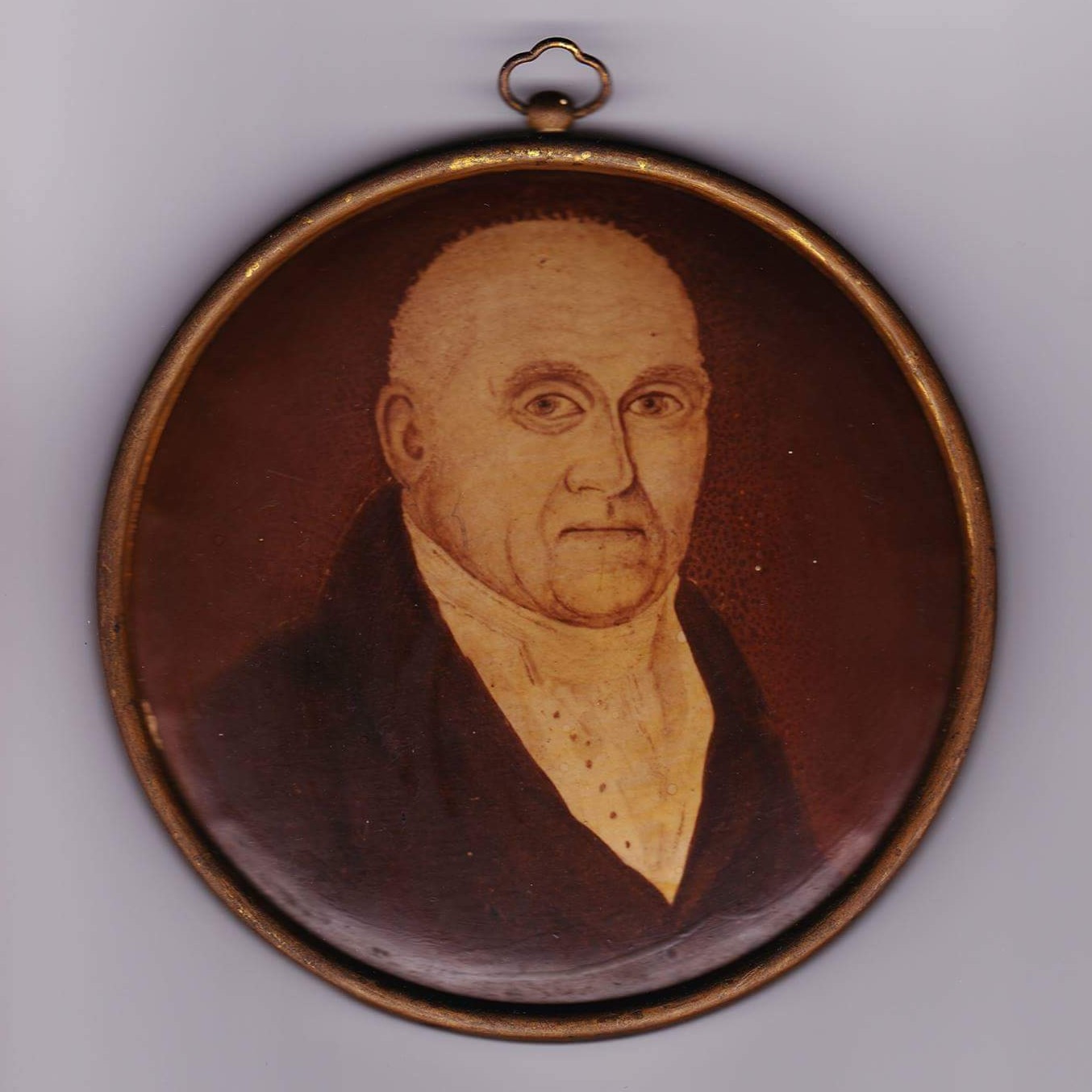
Charles Callaway Sr. circa 1815; father and namesake of one of Chatham’s early tavernkeepers.
Generations ago, when early Chatham residents traveled through town, they would have seen a tavern on the corner of Pitt Street. Since 1936 this corner has housed the town post office, but during the 1830s it was occupied by Callaway’s Tavern. In the original town plan, it was considered part of lot number 11 and owned by Maj. David H. Clark. He leased the building to Charles Callaway Jr. One of the early mentions of Callaway’s Tavern appeared in the Lynchburg Virginian (Vol. 11, No. 14) on October 4, 1832. A plan was made to take depositions in the tavern of several members of the Callaway family following the passing of their father Charles Callaway Sr. several years prior.
Not much can be found during the time Callaway’s Tavern operated, but it has a documented presence for at least five years. As covered in previous Heritage Highlights, there were a few other taverns in town, mostly for accommodating visitors to the courthouse. Just like Lovell’s Tavern and Davis Tavern, Callaway also provided lodging, meals, and stables. The lot owner put an ad in the Lynchburg Virginian (Volume 15, Number 53) advertising the house for sale. “In order to have a division of the well known Tavern Stand generally known as Callaway’s tavern, at Pittsylvania Court House, [Major David H. Clark] will offer the same for sale, to the highest bidder on the 2d day of March court next…consisting of a commodious Tavern and Lawyer’s house, Stables, &c. Store House, Counting Room, Cellar, &c. Also, an acre of ground attached to the same, of incalculable advantage to Hog and Horse Drovers…” Back then, livestock were a common sight around the courthouse village.
After the tavern was sold, Charles moved to Wilkes County, North Carolina. An ad in the Carolina Watchman (Salisbury, NC) from June 28, 1849 shows that he took charge of “the large and commodious house, well known as the WILKESBORO’ HOTEL” in town. “Persons wishing to spend the summer in this healthy and agreeable country can be accommodated on moderate terms. His stables have been repaired and well provided.” In the 1850 census, he was described as an innkeeper. By then, traditional taverns had largely given way to specialized establishments such as hotels for lodging, while saloons became places devoted primarily to drinking. One of Charles’s granddaughters, Elizabeth Poindexter married Capt. Hutchings L. Carter, whose family ran the busy Carter’s Hotel in Chatham throughout the second half of the 1800s.
Beyond the tavern, the Callaway family was connected to several prominent figures in Virginia history. The tavernkeeper’s daughter Sarah Callaway married George W. Meade, a descendant of the Washington family. (His great-grandfather, Col. Warner Washington, was a first cousin of George Washington). Through Charles Callaway’s mother, Judith Early, he was a first cousin (once removed) of Brigadier-General Jubal Early of Franklin County. One of Charles’s uncles, James Callaway, also married into the Early family, making several of their children double first cousins. Dr. George Callaway (born 1785) married Eliza Cabell, a sister-in-law of Patrick Henry Jr. Another cousin, Frances Callaway (born 1760), married James Steptoe, a clerk of Bedford County for 54 years. Steptoe’s sister Anne was a wife of Samuel Washington, one of George Washington’s brothers. Another first cousin, Dr. Henry G. Callaway (born 1781) married Anna Calland, the daughter of the locally well-known Scottish merchant and Pittsylvania County sheriff Samuel Calland.
While there isn’t much documented about Callaway’s Tavern, the extended history of his family provides many stories to tell. No depictions of the tavernkeeper could be found, as he passed away in 1854 when photography was still relatively uncommon. His father, however, sat for a painting in the year 1815. Several miniatures of Capt. Charles Callaway Sr. have been passed down various branches of the family. Perhaps he and his son shared some physical similarities. Today, few people mailing a letter at Chatham’s post office would realize they are standing on the site of one of the town’s earliest taverns.