
**This research was first published in the April 1, 2026 edition of the Chatham Star-Tribune newspaper as part of Kyle Griffith’s weekly segment entitled “Heritage Highlights.”
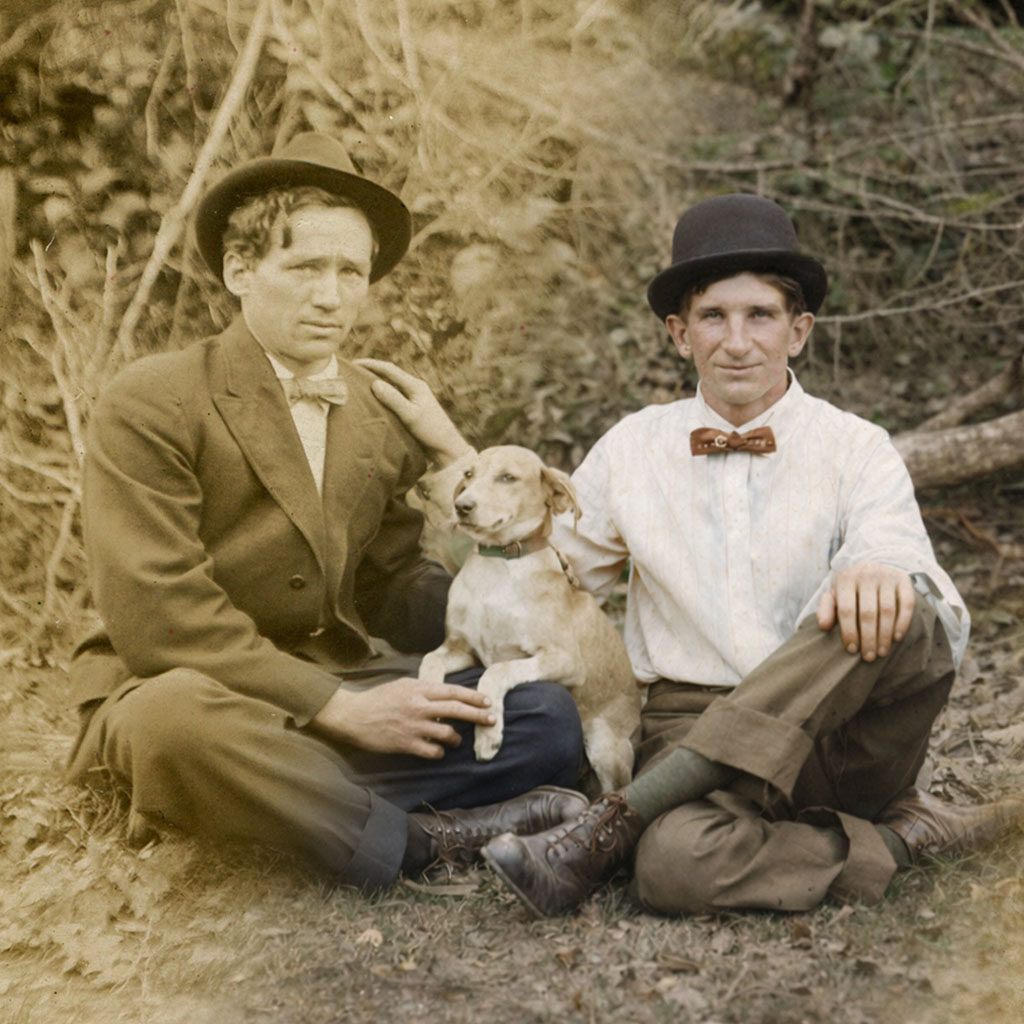
This example image is partially original and partially colorized with ChatGPT’s image creator
A family photo used to act as evidence, but now it can be more of a suggestion. Throughout the last decade, several useful tools have been implemented on websites that claim to colorize old black-and-white photos, though most did not quite live up to the quality of a trained artist’s eye. However, new generative AI applications can produce something that will appear exceedingly realistic at first glance. After uploading a picture, users provide instructions for what to change about the image. Certain programs can analyze and identify what’s happening in the picture, choose which logical colors belong to every area, then produce a unique image based on the prompt it was given. Sometimes the result is impressively accurate, but many times it makes convincing mistakes that go unnoticed. Even with explicit instructions to change nothing except the color, there are noticeable differences when overlaid onto the original image. The eyes may appear slightly narrower or it may develop a faint smile where there was none, and while these are not individually dramatic, the identity of the person begins to drift. For genealogists, this opens a new world of possibilities, responsibilities, and standards still in development. It can be a magical feeling to see an old family photo in realistic color. It is not magical, however, to accidentally reinvent history and confuse interpretations with reality.
To create something as close as possible to a true colorization–especially with photos over a century old–the source image will likely need some digital preparation. With old photos come creases, specks, scratches, and stains. Generative AI may misinterpret them as features of the clothing, background, or the facial features. Using a high-resolution scan of the image, it’s best to manually edit away the imperfections and balance the contrast to preserve the quality of the source image. For low quality scanned images or amateur portraits with murky details, sharpening becomes reshaping and colorizing becomes guesswork. Photographs produced by professional studios that have high clarity and deliberate lighting make for the best candidates at this point. Lesser-defined pictures lead to substitutions of facial features rather than recovery of true details.
The altered images should not be looked at as restorations but as conceptual approximations of how the past may have looked. The results may appear sharper but it is often a relatively low-resolution image. Take it with a grain of salt like with painted portraits, which are inherently flawed by the limits of the painter, but accepted as a likeness. At this point, AI programs are still learning and improving. As of now, the most favorable results have been seen with colorizations of photos without people. Photos of buildings and landscapes are less sensitive to minor alterations than faces when it comes to preserving the identity of the subject.
When using this very powerful digital tool, there are certain habits that will help provide transparency and authenticity when presenting AI-altered images. When making posts on social media or on genealogy websites, it is good practice to always include the original photo with the edited version and credit the program used. As enhanced images are saved, shared, and re-uploaded, they become detached from their originals. Generated images will become more convincing, and future generations will inherit already-altered images and accept them as authentic likenesses. The small and well-meaning changes can become permanent. Altered images are sometimes very helpful, but they should never replace the originals, and the altered versions have zero historical integrity until it is possible to compare and gauge their accuracy.
Just as a pen can be a malicious tool to scratch through and redefine legacies, it is the same tool used to document and help recall the truth. Generative AI presents a similar choice and introduces a new set of standards for the general public to encounter. It will present challenges for future researchers, but it has massive potential for personal research and historic preservation if used responsibly. The flaws can be quite obvious when viewing an altered photo of oneself or a loved one. Not everyone who creates and shares altered historical photos will have the same standards for authenticity and the concern for representing the past as faithfully as possible. A clearer image is not always a truer one.