

**This research was first published in the June 18, 2025 edition of the Chatham Star-Tribune newspaper as part of Kyle Griffith’s weekly segment entitled “Heritage Highlights.”
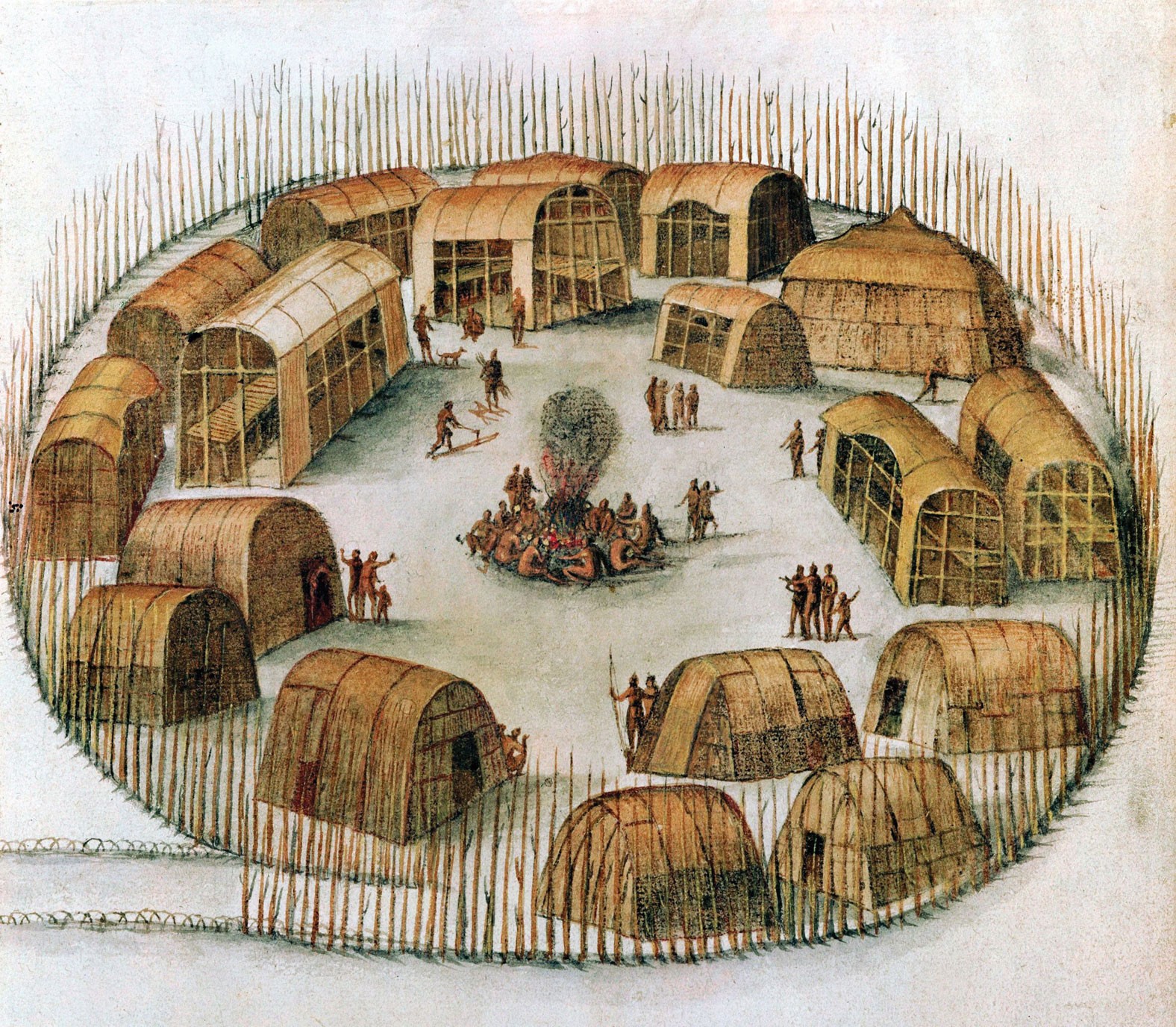
An Algonquian village like Banister would have seen. Pomeioc, North Carolina, 1585
In continuation of the valuable resources contributed by Naturalist John Banister, the namesake of Banister River in Pittsylvania County. During the late 1600s, his documentation of Native American culture in southern Virginia gives a colorful view from the perspective of a curious English academic. He looked forward to getting a better understanding of the varying cultures of the yet unexplored Virginia frontier. “When Times are setled & a Trade opened it would be expedient I went among ye Indians to take a View of their Towns, Forts, Manner of Living Customes, etc.” Throughout his description of local Native Americans written in 1690, which he named “Of the Natives,” Banister alludes to certain tribes along his travels south of the James River near the Appamatuck, Tuscarora, and the Occaneechi people.
“Their Bowes are made of Locust, their arrows of small reeds or sticks which they arm with a sort of white transparent stone…They heard them also with the spurs of the wild Turkey-cock…They fledge their arrows with Turkey feathers, which they fasten with glew made of the velvet horns of Deer.”
Banister described examples of meals that he witnessed the Native people consume in ancient tradition. They hunted along the rivers for beaver, turtle, and rattlesnake, “no part of which inwardly taken is dangerous,” he promised. They prepared deer meat in several forms including as a broth and in barbecued form. “When they travel, they usually Barbacew, that is, roast it, or rather dry it by degrees on a hurdle over a gentle fire…Their sauce to this dry’d meat is bears oyl, oyl of Acorns, & a good stomach, the last of which they are seldom without.”
He further described the selection of “phaseoli’ or wild beans, cushaw squash, and peaches which were commonly dried and eaten that way. “Instead of bread they carry Rocka hominy, that is Indian corn parched & beaten to [flour].” Banister remarked how the Native Americans he saw did not use salt, so in order to season their bread “they soak their corn in lye before they beat it, and also sprinkle their meat with the ashes of stickweed.” What Banister called stickweed appears to have been the plant feverfew (also called wild quinine). With chestnuts, hickory nuts, and walnuts some people made a product “by beating in a mortar they dry into an oyl like milke, & therefore they call our milk Hickerie.” He further listed foods that they scavenge for including wild strawberries, persimmons, whortleberries (“hurtleberries”), truffles (“trubbes”), groundnuts (“earthnuts”), and ”a tuberous root.” called tuckahoe. “But amongst all this variety of food, nature has taught them to use of no other drink but water…”
After visiting several Native villages, Banister made a description of the common methods of constructing homes. “Their houses are of bark bore up by small saplings bent arch wise after the manner of an arbor, & are very warm in the winter; but what is related of their being cool in the summer is false.” They slept on thin mats made from woven bull rush laid on simple wooden frames. “With the bark of birch they make very pretty bowls & dishes; also build small boats…which they call Periangas [canoes].”
He described the accessories worn by the Native women he encountered. “About their neck they wear a broad belt, or rather collar” made of wampumpeag, [“Wampon-peaque”], or white shell beads that were bartered with. Beads were “wrought out of a large Cunk [conch] shell…in their ears they hang a pipe about the bigness of the stem of a tobacco pipe” made from the drilled-out center of a shell called Roanoke, “a kind of bead mony also.”
This selection from Banister’s writings lets the reader travel back to a time in Virginia history that is commonly overlooked. Almost as an afterthought, Banister briefly described how the Native people kept track of time by keeping grains of maize [corn], small stones, or tying knots in a string. For example, each grain or each knot represented a number of “moons, weeks, or days” that had passed. To put into perspective how long ago John Banister wrote his accounts, if someone kept a grain of corn for each day since his death in May 1692 they would have over 122,200 pieces.