

**This research was first published in the October 8, 2025 edition of the Chatham Star-Tribune newspaper as part of Kyle Griffith’s weekly segment entitled “Heritage Highlights.”
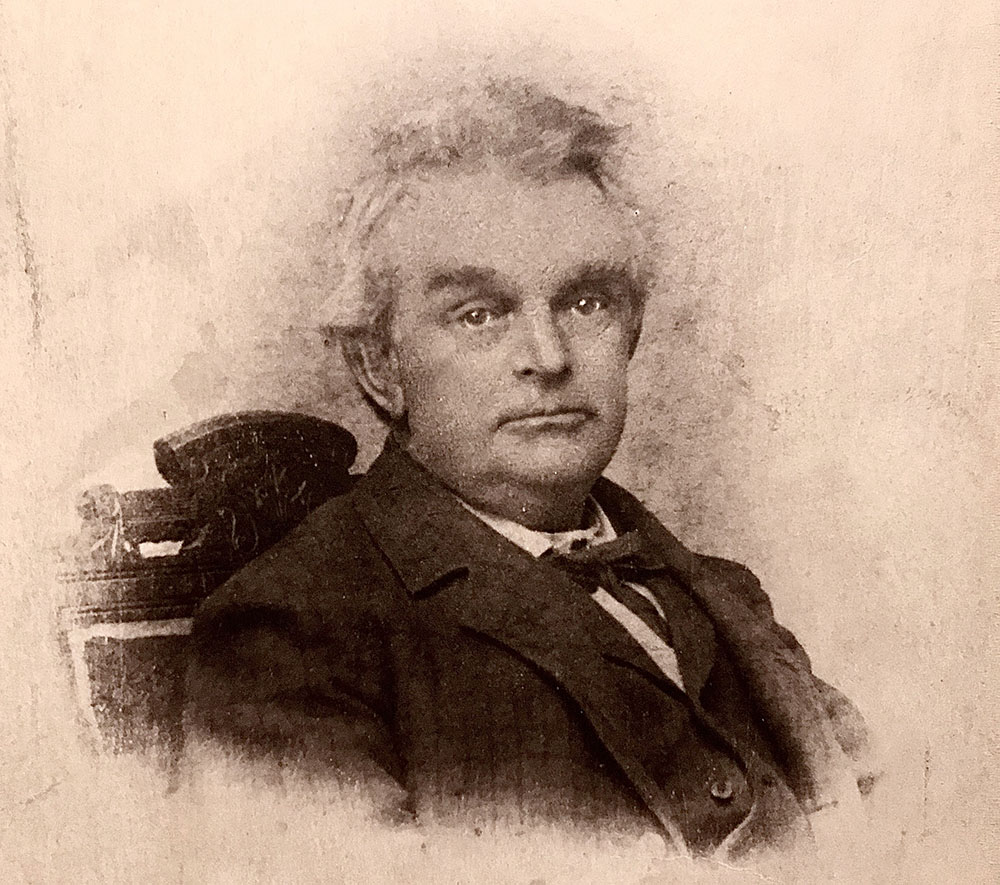
Charles DeMott (1831-1916) – coachmaker in Chatham during the 1800s
Old census records reveal that in the year 1860, there were a bit more than three hundred residents in the town of Chatham. Among the population were many well-known lawyers, doctors, and leading merchants in the county during that time, all of whom are interesting research subjects. Behind the scenes of main street lived hardworking artisans, craftsmen, and other “workmen” who kept the inner systems of the town running smoothly.
During the days when “driving” meant to handle a team of animals, many of the skills of craftspeople revolved around horses and wagons. A selection of saddlers offered their services in town, including Tandy R. Shepherd (who was later the jailor), William C. Keatts (son of merchant C.T. Keatts), and his apprentice saddler Adolphus Shelton. Two saddler brothers named Henry M. Glenn and John J. Glenn worked with their two brothers-in-law Wesley Sowers and Henry Sowers as apprentice saddlers. For the need of all that leather, there is no wonder why the branch running through Chatham was called Tanyard Branch.
Charles DeMott moved from Haverstraw, New York as a young man and established a long-running coachmaking business on Main Street. In addition, a man from Germany named Candidus Bilhartz (also called Charles Bilharz Jr.) was a coachmaker among several other business ventures before he established a weapon manufactory in town. See a previous article titled “Guests of the Old Carter’s Hotel” for details about a few more relevant craftsmen who lived in the hotel. From similar origins, Mr. Henry Viccellio from Germany worked as a painter in the town. James C. Wooding operated a wheelwright shop to fix wagon wheels and Matthias Bolanz from Germany had a blacksmith shop for all the metal work.
For furnishing houses, John H. Weiss from France worked as a “cabinet workman” and John F.M. Blair had a tinmaking shop with his brother Samuel B. Blair. In terms of clothing, Chatham had Daniel B. Hurley and William O. Humphreys as tailors, John Retsch from Bavaria as a boot and shoemaker, as well as a young apprentice shoemaker named John Chocklett [written as Shoclate]. For the ladies in town, Mrs. Elizabeth Townes made hats as a milliner.
In 1860, several years prior to emancipation, about forty-five residents of Chatham were recorded as free people of color. Father and son William Fry and James Fry ran a blacksmith shop. There were at least two carpenters: a man named Billy Silom [possibly misspelled], and Berry Smith who was noted to be a master carpenter. A man named Coleman Reynolds worked as a ditcher to cut drainage ditches in the town’s farmland. A possible sibling of his named Becky Reynolds worked as a shoe binder while her daughter of the same name lived nearby and worked as a washerwoman. The younger Becky lived with Mr. Peter Day, a hostler employed to keep horses. Several other washerwomen and ironers spent their days boiling pots of water, and beating the dirt out of clothes to make a living, including Polly Gregory, Sarah Star, and Mary Thomas. A woman in her mid-seventies named Fortune Thomas operated a bakery that probably kept that part of town smelling inviting. She baked cakes with the help of her son John Thomas, the “cake seller” and a man named Jesse Robertson who cut wood for use in the kitchen.
While census records offer little more than a name, age, and occupation, each entry hints at a fuller story. Chatham’s past was built by many hands, some of whom have been lost to time and nearly faded from memory. Their names and efforts deserve to be remembered, to better understand how people once fit into the town’s daily life. The saddlemakers and blacksmiths are long gone, and most of the other jobs have vanished in the age of modern machinery.