
**This research was first published in the June 24, 2026 edition of the Chatham Star-Tribune newspaper as part of Kyle Griffith’s weekly segment entitled “Heritage Highlights.”
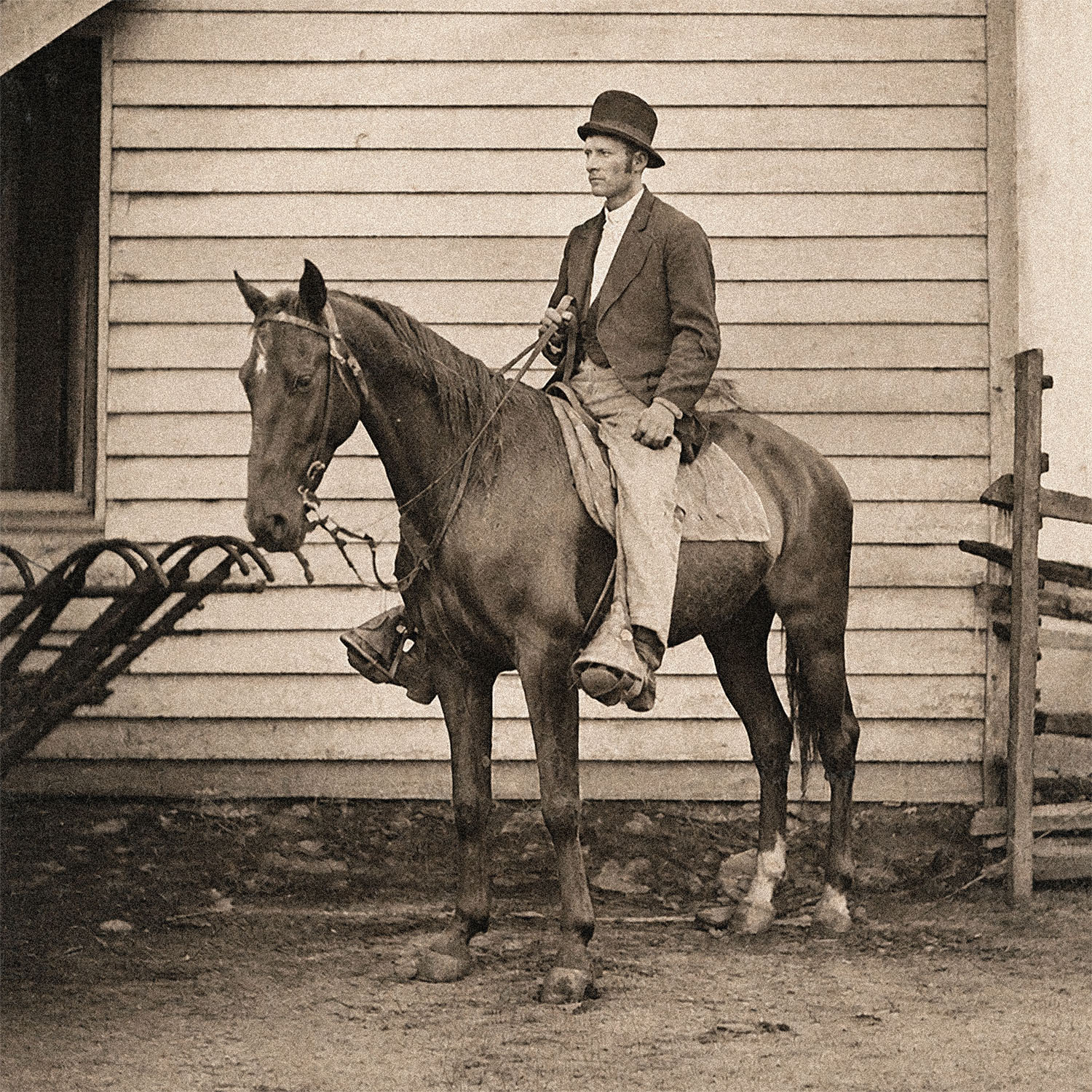
Unidentified horseman c1870s in Pittsylvania County, from a tintype owned by Kyle Griffith.
Image cropped and improved for digital clarity
Throughout history there have always been people who named animals on their farms, but for most there is little or no surviving documentation about their names and personalities. Thankfully, estate inventories and accounts kept a record of cattle and horses formerly owned by deceased county residents. A valuable index of named animals appears in the back of the book “Pittsylvania County Virginia Inventories & Accounts Current 1770 – 1797” compiled by Lucille C. Payne. After scouring historic newspapers for additional descriptions of horses in the county, a brief sketch of some of these animals can still be pieced together.
Somewhat of a personality can be found in both the animals and their owners based on their names. The cattle had noticeably more practical names, often based on their appearance or coloring. There were examples called Black, Red, Cherry, Strawberry, Brendle, and Star. “Maul Head” is likely to have been a broad fellow, and the cow “Fill Pail” sounds like a farming family’s reliable friend. The others listed were named Dubey, Flower, Hart, and Lill.
There is a bit more to learn about the horses and mares during the late 1700s. The horse names feel more individualistic. The inventory of John Lewis from April 20, 1795 listed a black horse named Byrd, a one-eyed bay horse named Dick, a sorrel horse named Dimple, a bay horse named Ragland, and two bay mares, Phoenix and Sall. Another owner, Theophilus Lacy, had three horses listed in his inventory on January 22, 1778. With a name like Pacolet, Lacy may have been familiar with the medieval tale of Valentine and Orson. The famous dictionary by Samuel Johnson in 1755 even included the entry “Pacolet, a famous horse in an old romance.” Lacy’s other two horses, Small Hopes and Trembles, probably had interesting stories behind their names. Joseph Fortune’s inventory from October 20, 1794 mentions his ownership of “part of Whynot a stud horse sold to Richard Farrar by Spencer Reynolds.” The inventory of Ann McDaniel on July 20, 1795 listed a horse called Rock. Another entry from the same day for Philemon Perkins listed a bay mare named Abraham, a “bauld eagle horse” named Dick, and two others named Ridgeling and Tarleton. His cousin Constant Perkins had an inventory entered on August 18 1793 that included a bay mare named Whizicks. Haynes Morgan had two horses entered on June 20, 1796: a young bay horse named Blossom and a gray horse called Hard Bargain. On September 19 of the same year, Richard Anderson had a black mare named Chinquapin, a black horse named Jack, and another mare called Fly.
The Virginia Gazette newspaper frequently published advertisements for lost, stolen, or found horses. Most included vivid descriptions of the animals, though the names were not typically given or known. People measured the height of horses in units of hands, with one hand equal to four inches. The following example from June 30, 1774, describes a lost horse found by Peter Copland: “TAKEN up, in Pittsylvania, a dark bay gelding, 5 years old, 14 hands high, branded X on the near shoulder, and something resembling the same mark on the near buttock, but is scarcely perceivable, and is shod before with shoes remarkably broad, has a small star in his forehead, and a saddle spot on each side.” Thomas Boaze sent in a similar advertisement on January 14, 1775. “TAKEN up, in Pittsylvania, a YELLOW BAY MARE two or three years old, a small blaze in her face, her near jaw bone seems as if it had been broke, but is now well, all her feet are white, has a hanging mane, but is not dockt, and branded on the near buttock O.” Others mention horses with small bells attached, or the way horses hold their tail while riding.
The surviving inventories from 1770 to 1797 contain a few dozen named animals, which represents just a tiny fraction of the horses and cattle that once grazed the county’s fields. Most passed through history anonymously, which makes the small collection of names all the more valuable. What survives today are only faint but memorable impressions of their lives.