

**This research was first published in the March 11, 2026 edition of the Chatham Star-Tribune newspaper as part of Kyle Griffith’s weekly segment entitled “Heritage Highlights.”
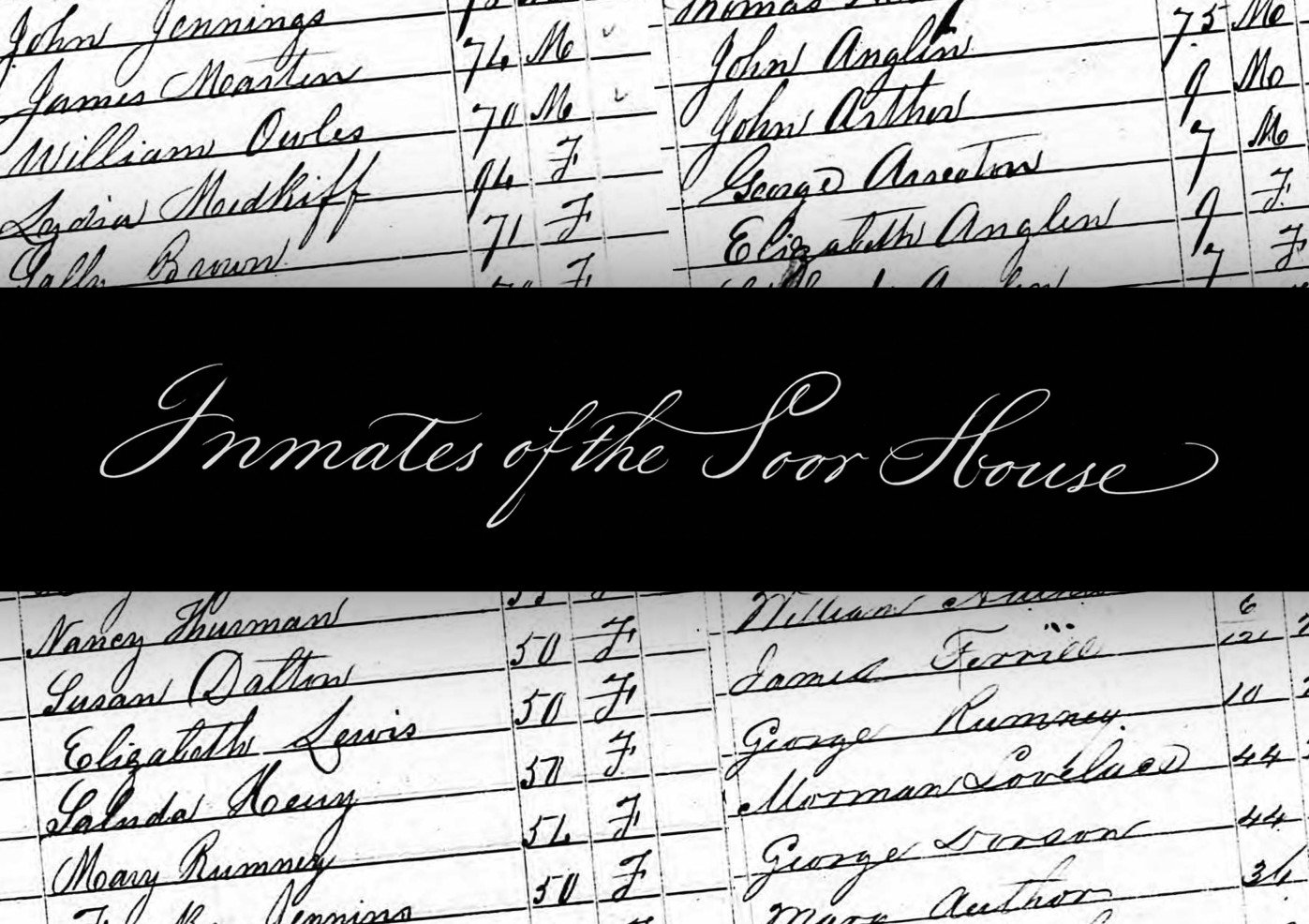
Part of the census pages transposed with the census taker’s note,
“Inmates of the Poor House”
In 1850, the federal census captured a rare glimpse into a side of local history mostly lost to time. The census taker during that year, Col. William H. Wooding, drew brackets around a list of fifty-two names and labeled them in his impressive scrolling penmanship as “Inmates of the Poor House.” The exact location of this early poor house farm may be revealed after further research. It appears to have been a different location than the known site of one previous poor farm used in Pittsylvania County starting in 1860, near Bearskin Creek. Poor house residents typically lived in small clusters of cabins on working farms, with chickens, hogs, shared gardens, and a communal water source. Such institutions filled roles similar to a modern nursing home, orphanage, and mental health facility. In addition, they were last resorts for people and families impoverished by unavoidable means.
The poor farm population in 1850 was made up of twenty-two male residents and thirty female residents. A quarter of them were above the age of seventy. Despite their long lives spent in the county, very few records survive about those who ended up at the poor house farm. A man named John Smothers was about ninety-five years old, and a woman named Lydia Midkiff was estimated to be ninety-four. It was considered remarkable to reach such an age in those harsh days. If the numbers are correct, they were born during the 1750s and reached adulthood before the American Revolution.
About thirty percent of the poor farm’s residents were marked with some sort of disability. The blunt language used in those times makes it difficult to know what the people called “insane,” or “deranged,” or worse were truly dealing with. Six of the residents lived with blindness and made do with the help of their neighbors at the farm. There appears to be several clusters of families within the list. No information was provided on the 1850 census to indicate if anyone was married, or whether the people were siblings, cousins, etc., but some inferences can be made. A lady named Mary Rumney lived with a girl named Ann who was likely a daughter, and two disabled relatives named Amanda, age twenty-five, and George, age ten. Another lady called Sally Brown lived with a disabled relative Easter Brown who was twenty-seven years old.
Six members of the Anglin family lived on the farm including a seventy-five year old man John and his relatives Jane, age thirty, Mary, age twenty-eight, and three young children. With no mention of disability, it provokes the question of what led the family away from home, assuming there had been one? Perhaps his daughters were widowed, and John couldn’t hold down the farm alone after a lifetime of physical labor. Without an heir to keep the livestock, own the property, and create an income, a family homestead could be wiped out. A simple illness, bad luck on crops, or accumulated debt serve as other valid reasons a family may be admitted to the poor house.
The list included five elderly African-American people alongside the white residents in the Pittsylvania Poor House. This is notable during the time before emancipation, and whether they were free is not given. Their entries are noticeably absent of surnames, which could suggest they were formerly enslaved, and also denies researchers the chance to learn if they were related. Their names were Frank, age eighty, Ned, age eighty, and Sarah, age seventy; and all of whom lived with some form of blindness. Another man and lady known only as Henry and Sally were in their late seventies.
Under Virginia law, counties were responsible for the care of their paupers. Some had once owned land, raised families, or labored in the county’s tobacco fields before their final years were spent at the county poor house. For many of the people mentioned above, little can be documented about their lives other than their name. Their entries in the 1850 census may be the only surviving public record of their lives in Pittsylvania County. See the full list of residents below:
“Inmates of the Poor House”
- John Smothers, 95
- Evan Evans, 80
- John Jennings, 78
- James Martin, 74
- William Oakes, 70
- Lydia Midkiff, 94
- Sally Brown, 71
- Rachael Doss, 70, deranged
- Mary Hardy, 69
- John Hands, 55
- William McDaniel, 52
- Mary Wyatt, 56
- Nancy Thurman, 55
- Susan Dalton, 50
- Elizabeth Lewis, 50
- Saluda Henry, 50, blind
- Mary Rumney, 56, insane
- Franky Jennings, 50
- Sally Newton, 45
- Eliza McCarty, 45, idiot
- Mourning Dabney, 36
- Fanny Ferrell, 39
- Patsy Wall, 35, blind
- Malinda Barber, 34, idiot
- Jane Anglin, 30
- John Mahue, 30, blind
- Mary Anglin, 28
- Amanda Rumney, 25, idiot
- Easter Brown, 27, idiot
- Francis Biby, 27, idiot
- Ann Rumney, 17
- Thomas Kerry, 16
- John Anglin, 75
- John Arthur, 9
- George Arreoton, 7
- Elizabeth Anglin, 9
- Sephiah Anglin, 7
- Mildred Ferrell, 7
- Jane Billings, 6
- John Stratling, 5
- Samuel Anglin, 3
- William Arthur, 6 months
- James Ferrell, 6 months
- George Rumney, 10, idiot
- Moorman Lovelace, 44, insane
- George Dodson, 34
- Mary Arthur, 34
African-American residents were listed with no given surnames
- Sally, 75
- Ned, 80, blind
- Henry, 79
- Frank, 81, blind
- Sarah, 75, blind
Pingback: The Whitmell Community in 1850 – Griffith Preservation