

**This research was first published in the October 22, 2025 edition of the Chatham Star-Tribune newspaper as part of Kyle Griffith’s weekly segment entitled “Heritage Highlights.”
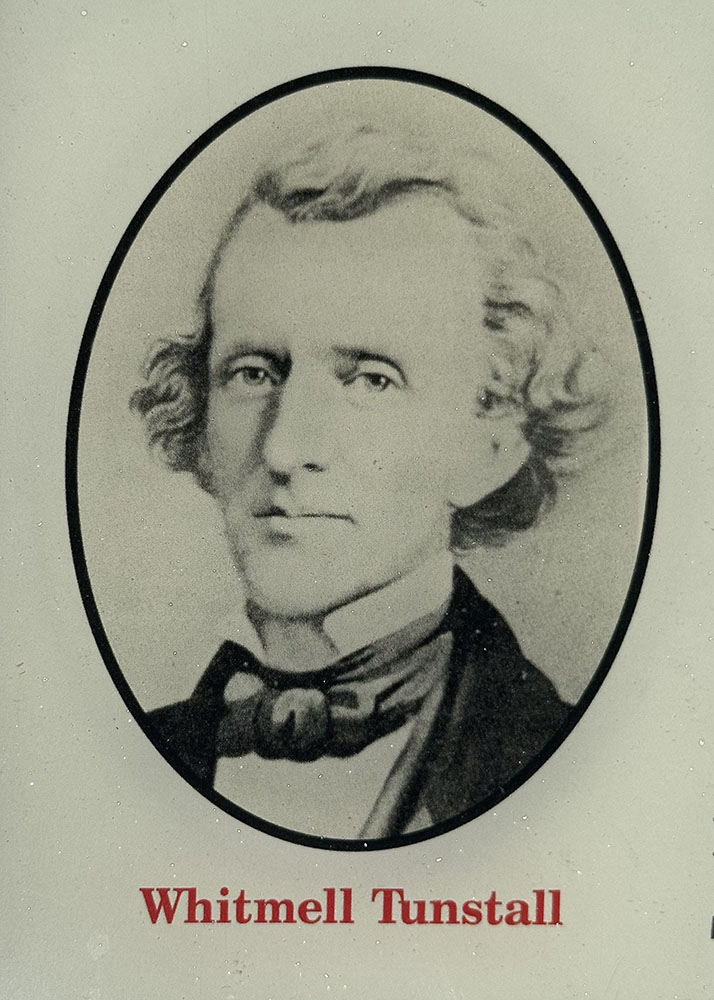
Depiction of Whitmell Pugh Tunstall (1810-1854) from an informational sign in Danville
The Tunstall family of Virginia made a name for themselves long before Pittsylvania County was founded. There were at least four generations of county clerks in that family, beginning with Richard Tunstall, who was born around 1700. For clarity, he may be considered the first generation. Colonial court records show he served as deputy county clerk of Essex County from 1721 to 1724. Ten years later he was active in King and Queen County, where he eventually served as a justice and a clerk of court from 1741 to 1757. In addition, as a leader in his local militia, he rose from the rank of Captain to Colonel in that county. He married Miss Ann Hill and raised a large family, most of whom remained in the Tidewater.
In the second generation, William Tunstall Sr. was born in 1743. He married Miss Elizabeth “Betsey” Barker of North Carolina, and together they raised a large family. He settled on lands that were originally part of western Pittsylvania County, later redesignated as part of Henry County. When the county seat was established at what is now Callands in 1767, William Tunstall served as the county’s first clerk. (In a previous article I covered more of the history concerning the architectural histories of the clerk’s offices and the terms held by the Tunstall men.) Many of William’s sons and daughters moved away to North Carolina, Kentucky, Alabama, and elsewhere.
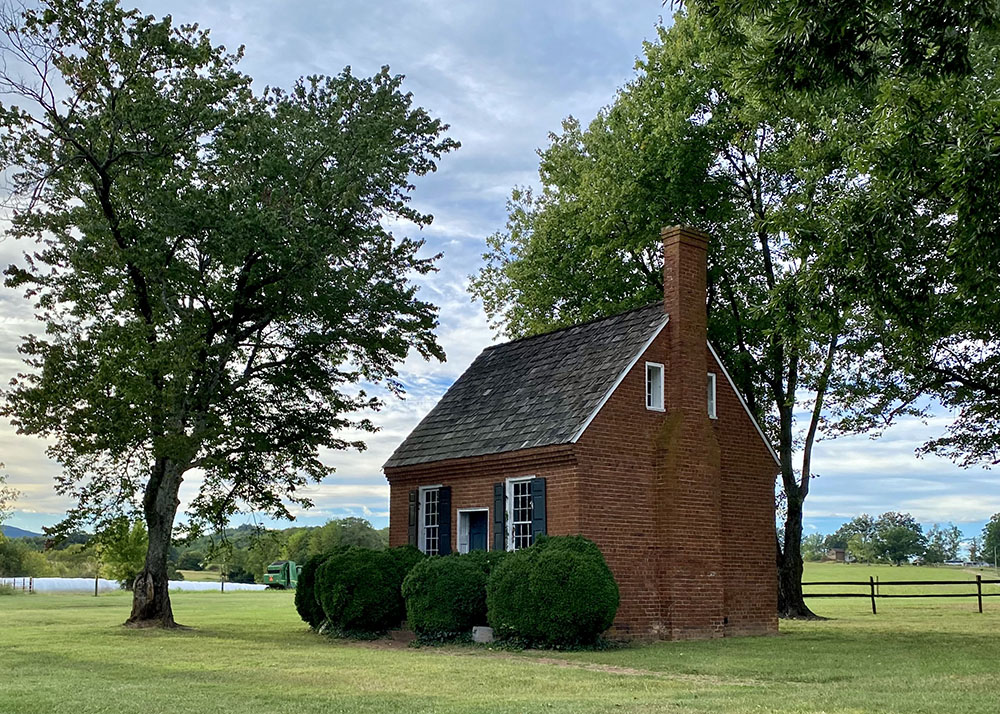
Historic clerk’s office (in Callands) used by William Tunstall Sr. and Jr. between 1767 and 1813.
The third generation of county clerks was William Tunstall Jr., born in 1772. He married Miss Sarah W. Pugh of Bertie County, North Carolina. They established Belle Grove Plantation on the south side of Cherrystone Creek and owned much of the land between modern-day Chatham and Tightsqueeze.
Among the fourth generation were several notable descendants. Their daughter Elizabeth married Col. George Townes, who later served as senator; another daughter, Winifred, married Nathaniel Wilson who was born at Dan’s Hill Plantation. A third daughter named Anne Whitmell Tunstall married her first cousin Samuel Williams Tunstall, who had an imposing log home built overlooking Cherrystone Creek in the 1830s. The home, which was once called Cherry Hill, still remains tucked away near the Route 29 exit just south of Chatham, and has undergone renovations and additions.
As the fourth generation of his family to also serve as a county clerk, William H. Tunstall (born c.1805), purchased a desirable property near the courthouse. Today, the property is located across from the Chatham Baptist Church. This house once stood surrounded only by its accompanying outbuildings and the large vast fields owned by James Johnson during the late 1700s. When the Town of Competition was laid out in 1807, this house stood as the northwestern boundary. It came into Tunstall’s possession in 1832 for about twenty years before passing to the Hargrave family. The home underwent substantial architectural changes, including the addition of the prominent porch, but the historic core of the home remains.
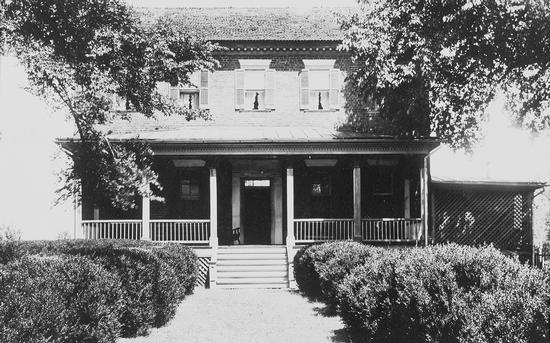
Belle Grove, 1930s, courtesy of WPA of Virginia Historical Inventory
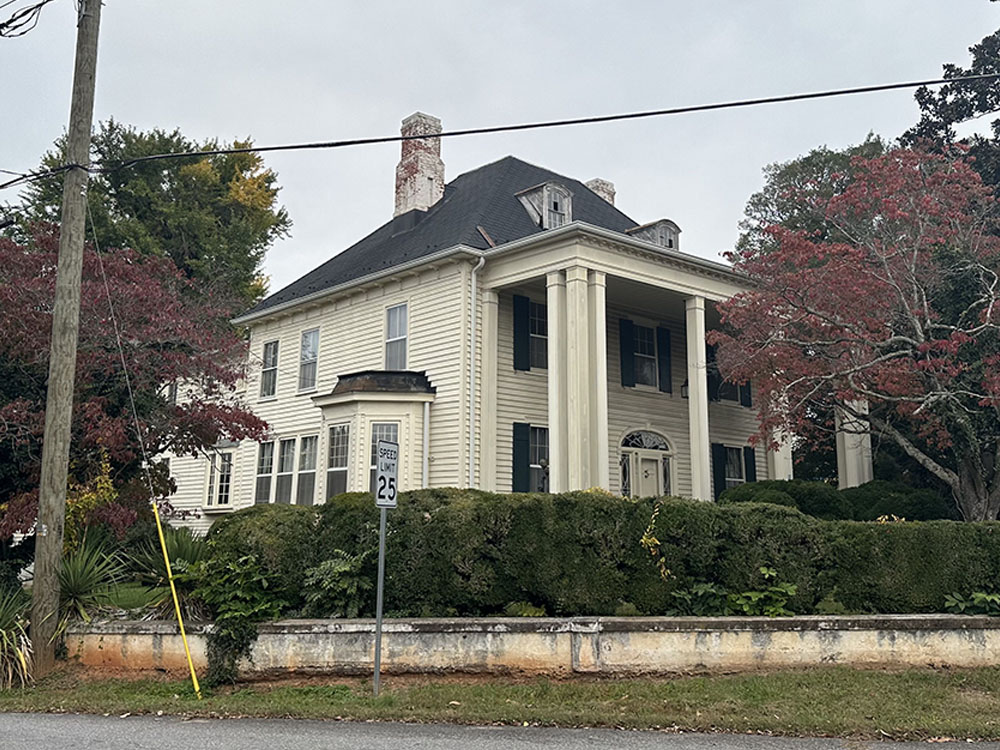
Tunstall-Hargrave House at 7 Court Place in Chatham, photo by Kyle Griffith 2025
The youngest of the fourth generation was Whitmell Pugh Tunstall (born in 1810) who made the county proud as a member of the Virginia General Assembly after winning a nine-year battle to charter the Richmond & Danville Railroad. He married Miss Mary Liggat and had five children. 1850 census records allow a peek into the agricultural production of Whitmell Tunstall’s land at Belle Grove. He owned 400 acres of improved farmland in addition to 231 acres of unimproved forest and waterways. His holdings included five horses, four milk cows, two working oxen, ten other cattle, forty sheep, and thirty-five swine. At that time, the farm produced 330 bushels of flint corn, 300 bushels of oats, sixty bushels of wheat, fifty bushels of Irish potatoes, and 30 bushels of sweet potatoes. They also collected sixty pounds of wool from their sheep and made fifty pounds of butter. Tragically, Whitmell Tunstall died of typhoid fever in 1854 at age forty-three, before the railroad’s completion, and was laid to rest at Belle Grove.
From this brief outline concerning a few notable members of the Tunstall family, one can appreciate how deeply the family intertwined with the county’s development. With such a prominent name that is still used day to day, their stories are not as widely known as they deserve to be.