

**This research was first published in the July 23, 2025 edition of the Chatham Star-Tribune newspaper as part of Kyle Griffith’s weekly segment entitled “Heritage Highlights.”
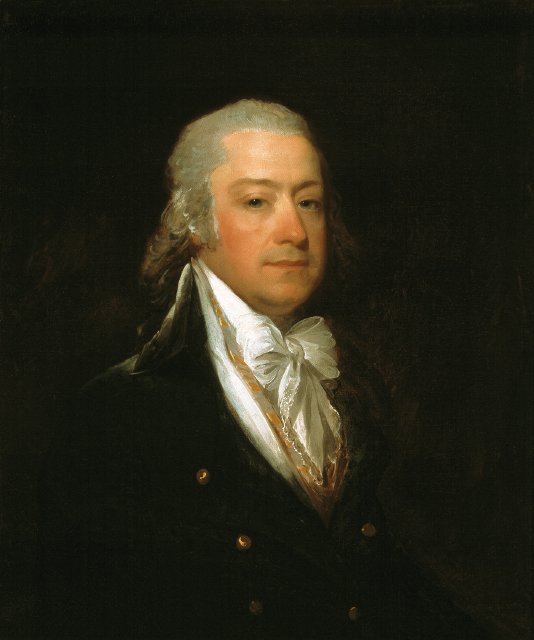
William L. Smith circa 1795
Painting by Gilbert Stuart
Between the years 1790 and 1791, Col. William Loughton Smith (born in 1758) kept a detailed journal of his adventures as he traveled between the capital in Pennsylvania and his home in South Carolina. As a member of the House of Representatives his lawful duties called him to Congress Hall in Philadelphia to serve in the 2nd United States Congress. Upon his return he followed a similar path that President George Washington had taken just a month prior during his Southern Tour.
On April 29, 1791, Col. Smith left Richmond heading southwest and went along several bad hilly roads, passing by pleasant streams with little settlements, with occasional relief of a span of hard and level roads and others allowing him shade throughout the woodland paths. As Col. Smith passed through the Virginia counties of Powhatan, Prince Edward, Amelia, and Charlotte, he remarked that the local settlers were “polite and kind to strangers,” especially after hearing the title of Colonel in his name. Col. Smith was able to purchase from them enough food for his horses as well as “bacon, eggs, salad, corn bread, tolerable rum, good cool water, sometimes a chicken, but not often…” He noted the peculiar accent of local people as he passed through southern Virginia, remarking that “they pronounce the words ‘there’ and ‘stairs’ different from any of the inhabitants of the other States, calling the one ‘stars,’ and saying ‘thar.’” He encountered men at local taverns “where a great number will collect and pass whole mornings in conversing about their geldings and ‘mars,’ [mares] and relating anecdotes about their neighborhood and their own adventures.”
In comparison to the luxury Col. Smith had seen growing up in Charleston, South Carolina, or while studying law in London, England, the frontier roads of the Virginia Piedmont provided little more than necessity in terms of living quarters. “The dwellings of gentlemen of property being generally remote from cities and mechanics, are generally most out of order; if a pane of glass be broken, or some of the paper loose, or the wall peeled off, or the lock of a door deranged, they will continue so for years, for there is no remedy at hand. In this respect their houses are not comfortable. You will therefore be put up at a house perfectly unfurnished and uncomfortable, the owner of which drives his carriage and four.” While Col. Smith was the outlier in this situation, his perspective more closely reflects that of how a modern person may react in his situation, having known the luxuries of living in commodious homes with a source of containment among multiple rooms, with new hardware, and all the extra accommodations.
As he neared the counties of Halifax and Pittsylvania, he climbed a hill and took in “a beautiful view” with “the most verdant wheat fields on the sides of find undulating hills intermixed with woods; then descending a steep hill, approached Staunton River and passed through a low ground cleared, which appears very fine land, being sometimes overflowed by the river, which though at present not above 150 yards wide is at times nearly a mile wide, rising forty feet and spreading overall the low grounds in its vicinity.” He continued, saying “I crossed the ferry; some countrymen forded it at the same time, for though the river is wide and the water deep and rapid, the fording is reckoned safe…At the moment that I crossed the ferry came on a thunder-storm,” which poured down rain, created a rapid wind and water current, spooking his horses during their first time crossing a ferry. Hopefully his clothes had dried out by the time he reached the home of Col. Isaac Coles (born 1747) with whom he “tarried the forenoon, and after dinner proceeded on towards Dan River to cross it at Dix’s Ferry.” Further impressions from Col. Smith will be covered in a part two to this article.